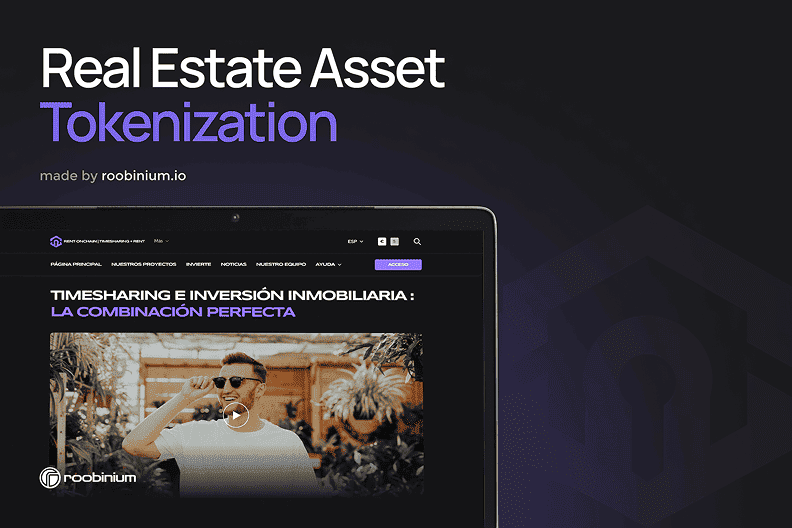
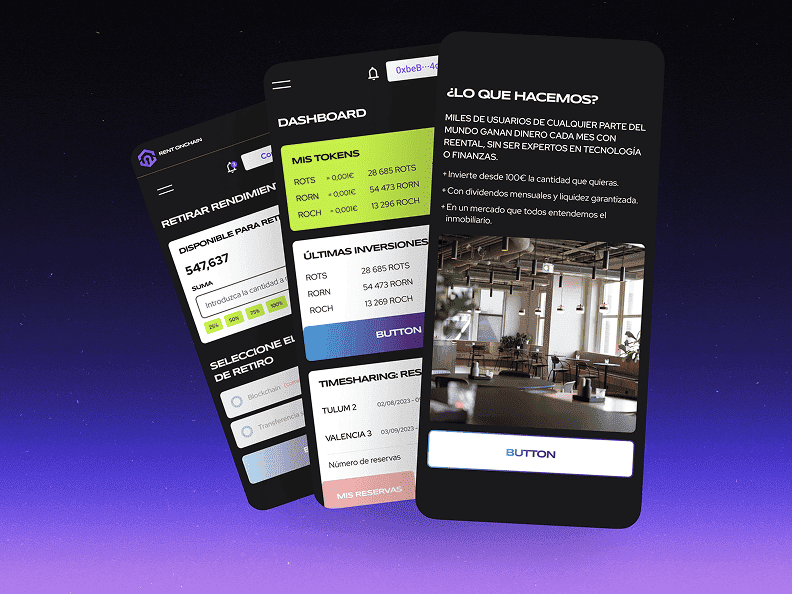
A full-cycle development of the Rent Onchain platform — how Roobinium acted as a product team building an NFT marketplace.
A full-cycle development of the Rent Onchain platform — how Roobinium acted as a product team building an NFT marketplace.
About the Project
Rent Onchain is a startup at the intersection of real estate, Web3, and RWA. At its core is a timesharing platform and an NFT marketplace built on the Polygon blockchain.
Rent Onchain is a startup at the intersection of real estate, Web3, and RWA. At its core is a timesharing platform and an NFT marketplace built on the Polygon blockchain.
The main idea and mission of the project is to democratize real estate investments and simplify market entry through tokenization of usage rights and a transparent blockchain infrastructure.
The main idea and mission of the project is to democratize real estate investments and simplify market entry through tokenization of usage rights and a transparent blockchain infrastructure.
Solution
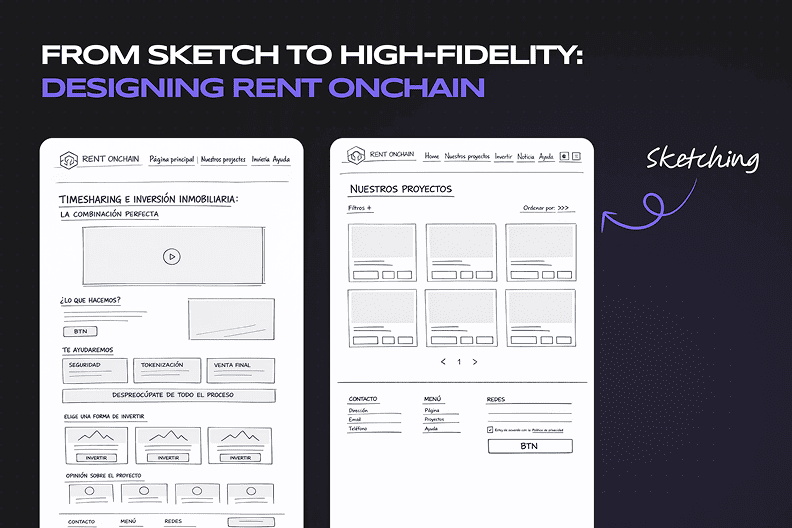
1. Product Analytics & Design
We deliberately avoid creating bulky 100-page specifications. Instead, before development starts, we prepare a compact yet effective documentation package aligning product, design, and engineering.
At the core is a PRD (Product Requirements Document) of 10–20 pages, covering:
- product goals
- target audience
- key scenarios (investing, issuing tokenized assets, secondary market, asset management)
- regulatory and jurisdictional constraints
- KPIs
- product goals
- target audience
- key scenarios (investing, issuing tokenized assets, secondary market, asset management)
- regulatory and jurisdictional constraints
- KPIs
This document sets boundaries and supports decision-making throughout development.
In parallel, we design detailed user flows:
- registration
- verification
- purchasing RWA assets
- portfolio management
- withdrawals
- reporting
- registration
- verification
- purchasing RWA assets
- portfolio management
- withdrawals
- reporting
These flows help visualize the system holistically and identify bottlenecks before coding begins.
We started with product discovery:
- defined key user scenarios
- structured the platform architecture
- mapped user journeys
- identified critical trust points (transaction confirmations, NFT ownership transparency, yield visibility)
- defined key user scenarios
- structured the platform architecture
- mapped user journeys
- identified critical trust points (transaction confirmations, NFT ownership transparency, yield visibility)
Two primary audience segments were identified:
- real estate investors
- timesharing users
Each segment received tailored entry, purchase, and asset management flows.
2. UX Architecture
We designed:
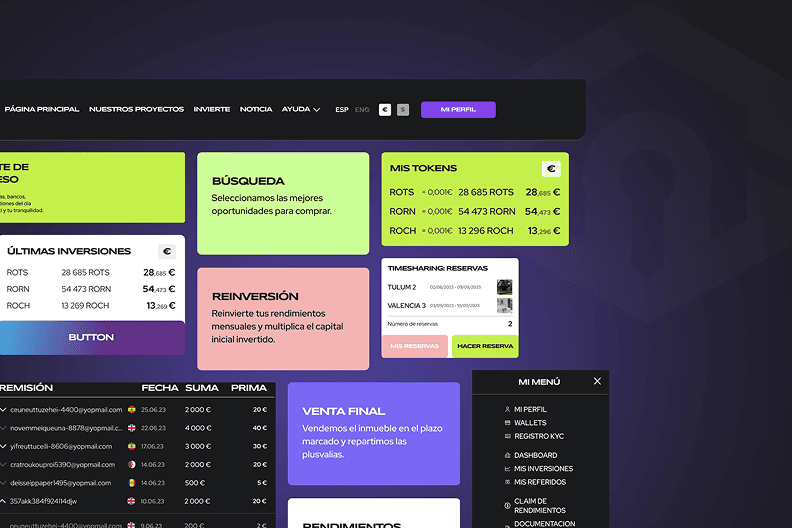
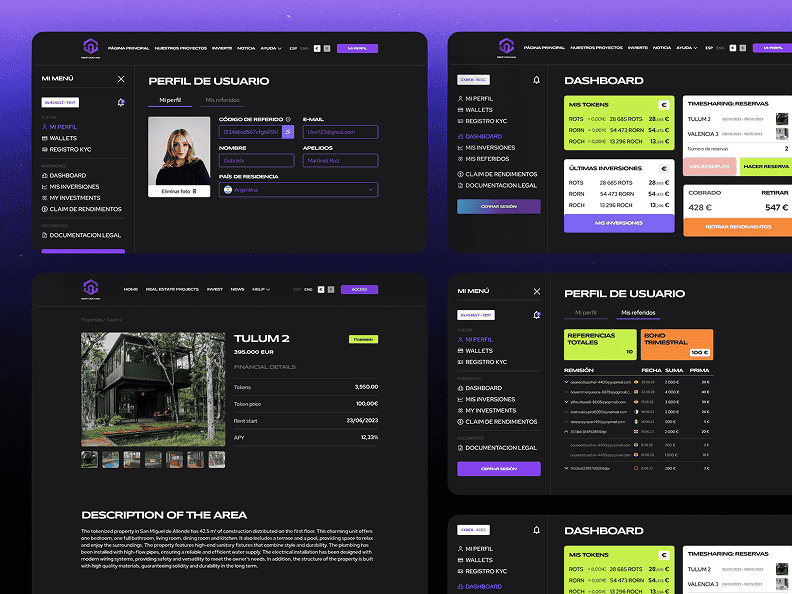
- NFT marketplace structure
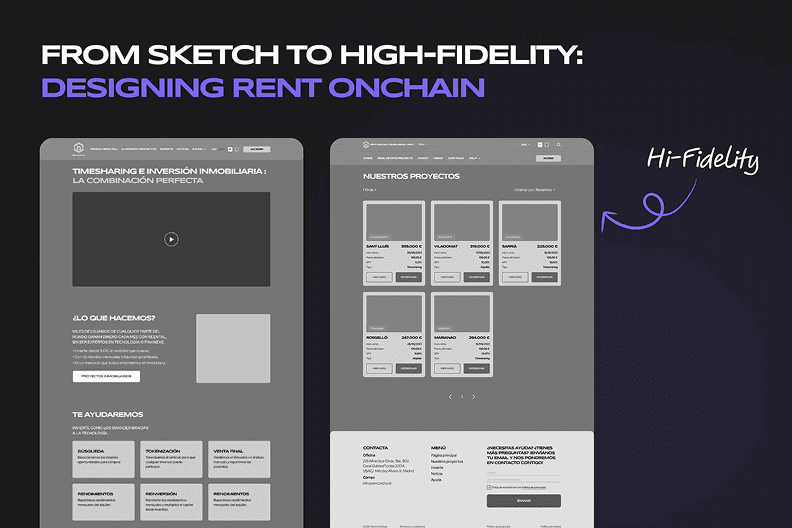
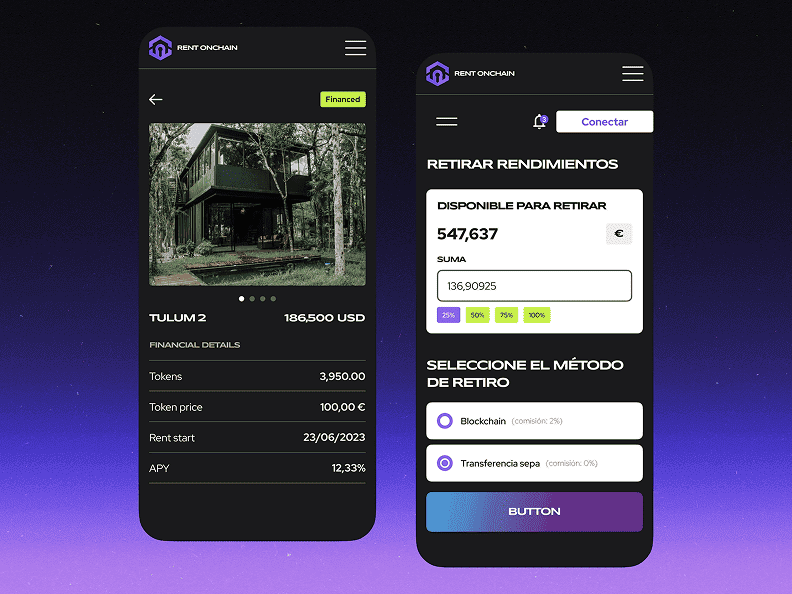
- property listing pages
- Time-NFT purchase flow
- raffle participation mechanics
- user dashboard with asset visualization
Special attention was given to:
- transparent fee display
- transaction clarity
- simplifying Web3 interactions for non-crypto users
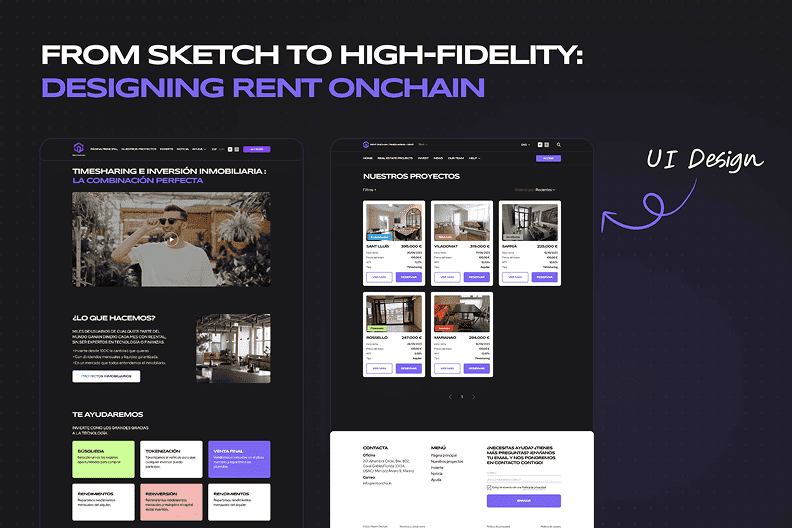
3. UI Design & Design System
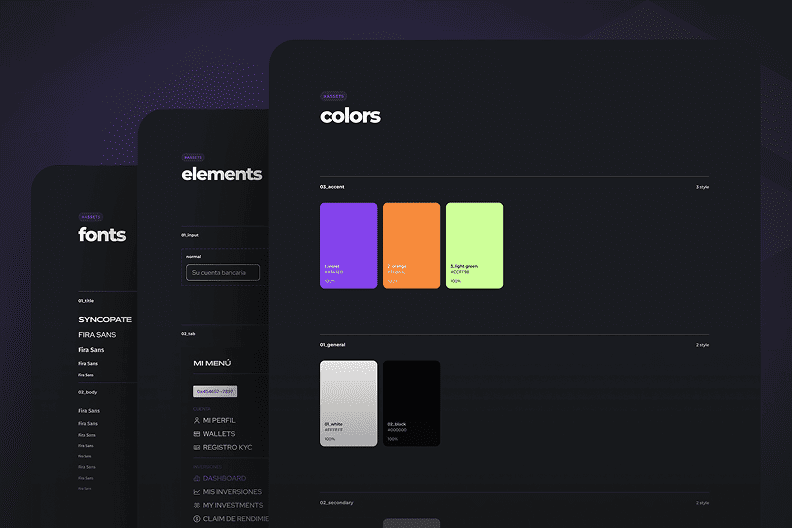
We built a comprehensive design system including:
- core brand identity
- typography
- color palette
- UI component library (modals, states, interface elements)
This enabled faster development, consistency, and scalable growth without quality loss.
4. Development & Integration
Tech stack: Node.js, React / Next.js, Solidity
Architecture included:
- frontend (React / Next.js)
- backend API (Node.js)
- database
- integrations (payment providers, custodians, compliance services)
- admin panel
- CI/CD pipeline
A key element was the API contract (OpenAPI / Swagger), allowing frontend and backend teams to work in parallel without blocking each other.
We also defined a clear Definition of Done for every task.
Branching strategy:
- main — production
- develop — staging
- feature/* — new features
- hotfix/* — urgent fixes
Each Pull Request:
- linked to a Jira task
- included change descriptions
- passed a checklist (tests, no breaking changes, updated docs if needed)
No changes were merged without code review.
Jenkins pipeline automation:
Automated steps triggered for pull requests, develop, and main branches.
| For Pull Requests: | For develop: | For main: |
|---|
| install | deploy to staging | deploy to production |
| lint | smoke tests | release notes |
| test | | tagging |
| build | | |
For develop:
- deploy to staging
- smoke tests
For main:
- deploy to production
- release notes
- tagging
This ensured predictable releases and reduced human error.
The team delivered:
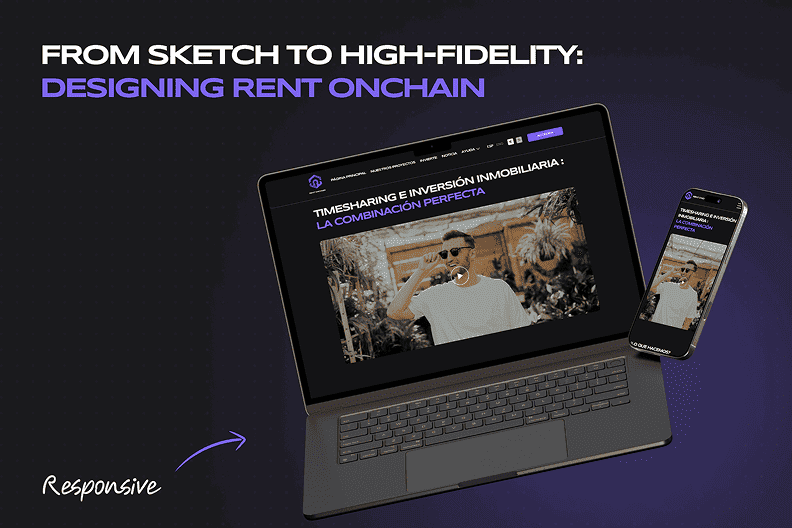
- responsive frontend
- Polygon blockchain integration
- smart contract connectivity
- transaction status tracking
- fully functional marketplace
We supported the project through full launch.
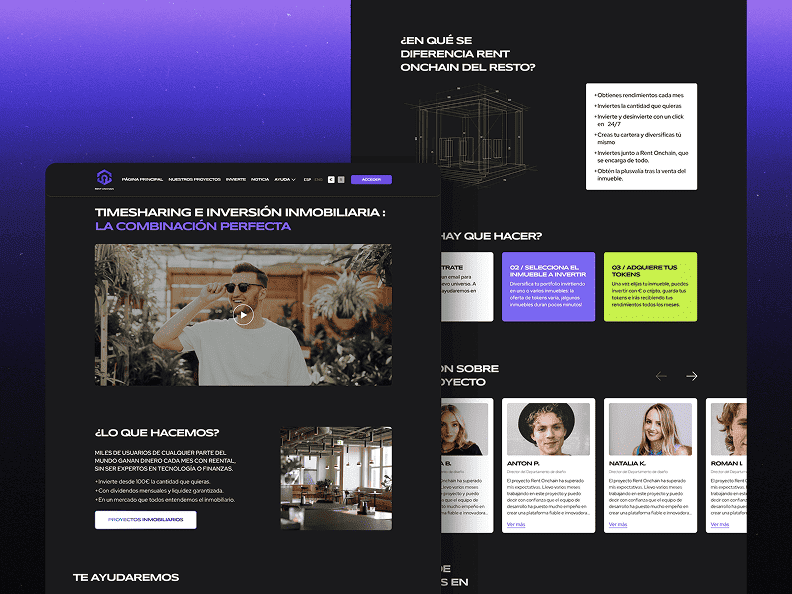
5. Landing Pages & Investment Website
Their goals:
- communicate product value
- build trust
- explain real estate tokenization
- drive investor registrations and leads
6. QA, Acceptance & Releases
QA process included:
- validation against acceptance criteria
- testing key user flows
- error handling
- yield calculation accuracy
- load testing (when required)
Before release:
- develop branch freeze
- release branch creation
- final regression testing
- production deployment
- post-release monitoring
Post-release metrics:
- active users
- investment volume
- API errors
- latency
We set up alerts, analyzed logs, and conducted team retrospectives.